


The legal landscape is fiercely competitive. While foundational strategies like SEO and paid ads remain crucial, the modern law firm needs a distinct edge to convert prospects into profitable cases. AI-powered tools provide that advantage. They are not about futuristic concepts; they are about practical efficiency, automating intake, personalizing client communication, and delivering measurable marketing ROI. This is where the right AI tools for legal marketing become essential for growth.
This guide moves beyond the hype to provide a practical breakdown of the 12 best AI platforms for legal marketing, specifically curated for attorneys and law firm marketers. We analyzed each platform to help you find the best fit for your firm's specific needs, whether you're a solo practitioner or a multi-office operation. We will explore how these solutions can help you build a smarter, more resilient practice.
Inside this resource list, you will discover:
- A detailed analysis of each tool, including its core AI features.
- Practical, law firm-specific use cases for generating and converting leads.
- Honest pros and cons based on real-world application and limitations.
- Clear pricing information and implementation guidance to get you started.
We will analyze each tool's real-world application, ethical considerations, and how to integrate them into your firm's growth strategy without compromising compliance. From automating lead qualification with AI receptionists to optimizing ad spend with predictive analytics, these solutions are designed to build a more efficient marketing engine for your firm. Each entry includes direct links and screenshots to give you a clear view of the platform.
1. Lawmatics
Lawmatics is a comprehensive legal-specific platform that combines a CRM, client intake system, and robust marketing automation. It’s one of the most powerful AI tools for legal marketing because it's built from the ground up for law firms, embedding artificial intelligence directly into the legal workflow. This eliminates the need to piece together multiple generic tools, reducing compliance risks and tool sprawl.
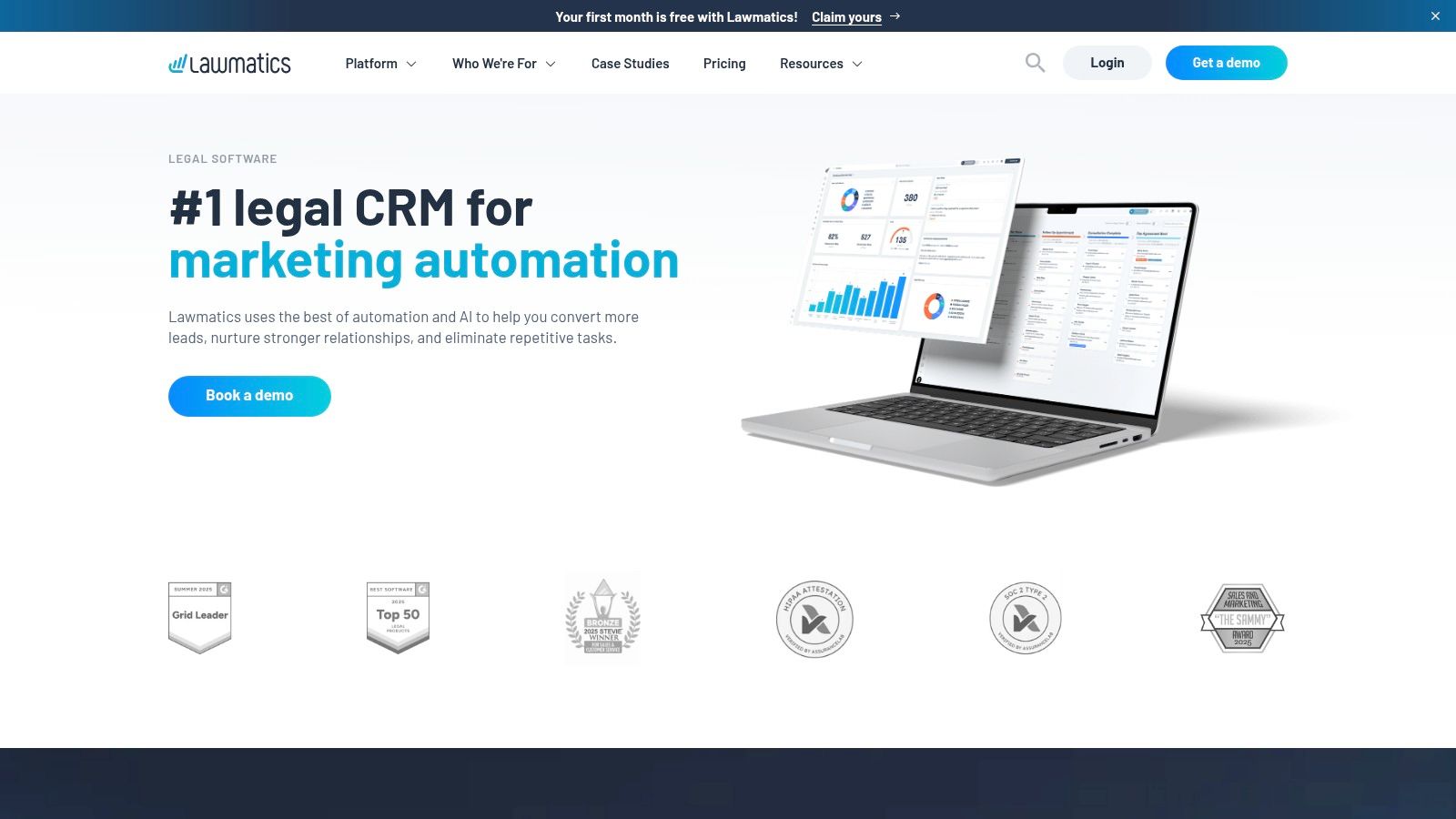
The platform’s standout AI feature, LM[AI], enables one-click drafting of personalized emails. This tool analyzes a contact's case details and previous interactions to generate tailored follow-ups, saving significant time while ensuring communications are relevant and empathetic.
Key Features & Use Cases
- LM[AI] Content Generation: Instantly draft personalized client follow-up emails, intake confirmations, or marketing nurture messages based on specific case types and contact data. This is ideal for a personal injury firm needing to send a quick, compassionate check-in email.
- Visual Automation Builder: Create complex drip campaigns for different practice areas. A family law firm, for example, could build a workflow that automatically sends educational content to new divorce consultation leads.
- Audience Segmentation: Group contacts by case type, lead source, or status to send targeted campaigns. This allows firms to market specifically to past clients for new services or re-engage cold leads with relevant offers.
Pricing & Implementation
Lawmatics uses a custom pricing model, so you must request a demo for a quote. Be aware that add-on features can increase the total cost. While powerful, the automation builder has a learning curve. New users should leverage Lawmatics' support resources and start with simple workflows before building complex, multi-stage automations.
| Pros | Cons |
|---|---|
| Combines CRM, intake, and marketing into one platform. | Custom pricing can be opaque; add-ons increase cost. |
| AI and workflows are designed specifically for legal use. | The automation builder may be complex for beginners. |
| Strong reputation and recognized on platforms like G2. |
Website: https://www.lawmatics.com
2. Scorpion
Scorpion is a full-service legal marketing agency that integrates proprietary technology and AI tools for legal marketing to drive case acquisition. Instead of offering a standalone DIY tool, Scorpion combines its AI-powered platform with expert marketing services, making it a comprehensive solution for firms looking to outsource their growth efforts and maximize marketing ROI.
The platform's strength lies in using AI to optimize advertising spend and performance in real time. This approach moves beyond static campaign management, allowing for dynamic budget shifts to the most effective channels, which is critical in highly competitive practice areas like personal injury.
Key Features & Use Cases
- Budgets AI: Dynamically reallocates advertising spend across channels like PPC, social media, and LSA based on performance data. An employment law firm could use this to automatically increase its budget on LinkedIn ads when they generate more qualified leads than Google Ads.
- AI-Assisted Ad & Landing Page Optimization: Leverages AI to test and deploy the most effective ad copy, creative, and landing page layouts to improve conversion rates for specific legal audiences.
- Full-Funnel Insights: Integrates with practice management software like Clio to connect marketing spend directly to signed cases and revenue, providing a clear picture of campaign profitability.
Pricing & Implementation
Scorpion operates on a full-service agency model, so pricing is customized based on the firm's goals, practice area, and competitive landscape. This is a premium solution best suited for firms ready to invest significantly in growth. As it's a managed service, implementation involves collaborating with the Scorpion team rather than a self-service setup, which means less direct control but also less in-house work.
| Pros | Cons |
|---|---|
| Combines expert marketing teams with powerful AI tools. | Agency pricing is a premium investment for solo or small firms. |
| Deep experience in competitive consumer law practice areas. | Less DIY control; outcomes depend on collaboration with the agency. |
| Integrations tie marketing spend directly to case revenue. |
Website: https://www.scorpion.co
3. FindLaw (Thomson Reuters)
FindLaw is a comprehensive digital marketing service from Thomson Reuters, offering law firms an integrated solution for websites, advertising, and directory placements. While not a standalone AI tool in the same vein as a content generator, it leverages data and analytics that are foundational to many AI tools for legal marketing. Its primary value is providing a one-stop-shop for establishing a firm's online presence, from a professional website to targeted pay-per-click (PPC) campaigns.
The platform’s strength lies in its national reach and deep-rooted legal marketing expertise. The INSIGHT analytics dashboard provides firms with crucial performance data, helping them understand lead sources and campaign ROI, which informs smarter, data-driven marketing decisions.
Key Features & Use Cases
- Award-Winning Website Packages: Get a mobile-friendly, professionally designed website without needing in-house technical skills. This is ideal for a new solo practitioner who needs a credible online presence quickly.
- PPC Campaign Management: Utilize Google-certified strategists to run targeted ad campaigns. A personal injury firm could use this to attract high-intent searchers looking for representation after an accident.
- Premium Directory Listings: Gain high visibility on the FindLaw.com directory, one of the most trafficked legal consumer portals. These profiles act as powerful digital citations, which are crucial for local SEO. You can learn more about building citations for lawyers to understand their importance.
Pricing & Implementation
FindLaw's pricing is customized based on the package of services selected, and firms should be prepared for long-term contract commitments. The cost can become substantial when bundling websites, PPC, SEO, and premium listings. Implementation is handled by their team, making it a turnkey solution, but this also means less direct control for the law firm over technical details.
| Pros | Cons |
|---|---|
| Combines site, ads, and directories into one vendor. | Long-term contracts are common and can be restrictive. |
| National reach with deep legal-specific marketing expertise. | Costs can add up when bundling multiple services. |
| Quick way to buy visibility through premium listings. |
Website: https://www.findlaw.com/lawyer-marketing/services/
4. Martindale‑Avvo (Avvo, Nolo, Ngage)
Martindale-Avvo represents a network of high-traffic legal directories and services that leverage intelligent automation for lead generation. While not a singular AI platform, its Ngage Live Chat service acts as one of the key AI tools for legal marketing by using automated logic to qualify website visitors in real time. This system connects potential clients with live operators, streamlining the intake process directly from a firm’s website.
The primary advantage is its expansive reach across well-known consumer legal brands like Avvo, Nolo, and Lawyers.com. By combining directory advertising with an AI-assisted chat function, firms can capture leads from multiple high-intent sources through a single provider, simplifying vendor management and campaign oversight.
Key Features & Use Cases
- Ngage Live Chat: Deploy an intelligently automated chat service on your firm’s website to pre-qualify visitors 24/7. An immigration law firm can use it to screen for visa types or residency status before escalating the chat to a live operator for an intake call.
- Pay-Per-Lead Programs: Access qualified leads generated from the high-authority Martindale-Nolo network. This allows a bankruptcy firm, for instance, to receive a steady stream of leads from consumers actively researching debt solutions online.
- ProVantage Multi-Directory Presence: Manage your firm's visibility and advertising across the entire network from a centralized account. This is ideal for a multi-practice firm wanting to ensure consistent branding and lead-gen efforts across different legal verticals.
Pricing & Implementation
Martindale-Avvo's services, including Ngage and directory advertising, are based on custom quotes tied to practice area, geographic competition, and desired lead volume. Integrating Ngage is straightforward; it typically involves adding a code snippet to your website. Be prepared to work with their team to define qualification criteria to ensure the automated chat aligns with your firm’s intake goals.
| Pros | Cons |
|---|---|
| Broad consumer reach across well-known legal brands. | Lead quality can vary by practice area and market. |
| Multiple lead sources (directory, chat, PPL) from one provider. | Pricing is not transparent; requires a custom quote. |
| Flexible programs to match different firm growth stages. |
Website: https://www.martindale-avvo.com
5. CallRail
CallRail is a call and form tracking platform that uses AI-powered Conversation Intelligence to help law firms prove marketing ROI. While not a legal-specific tool, it's one of the most effective AI tools for legal marketing for firms that invest heavily in paid advertising like PPC or local service ads. It connects inbound calls, texts, and form submissions directly to the marketing campaigns that generated them.
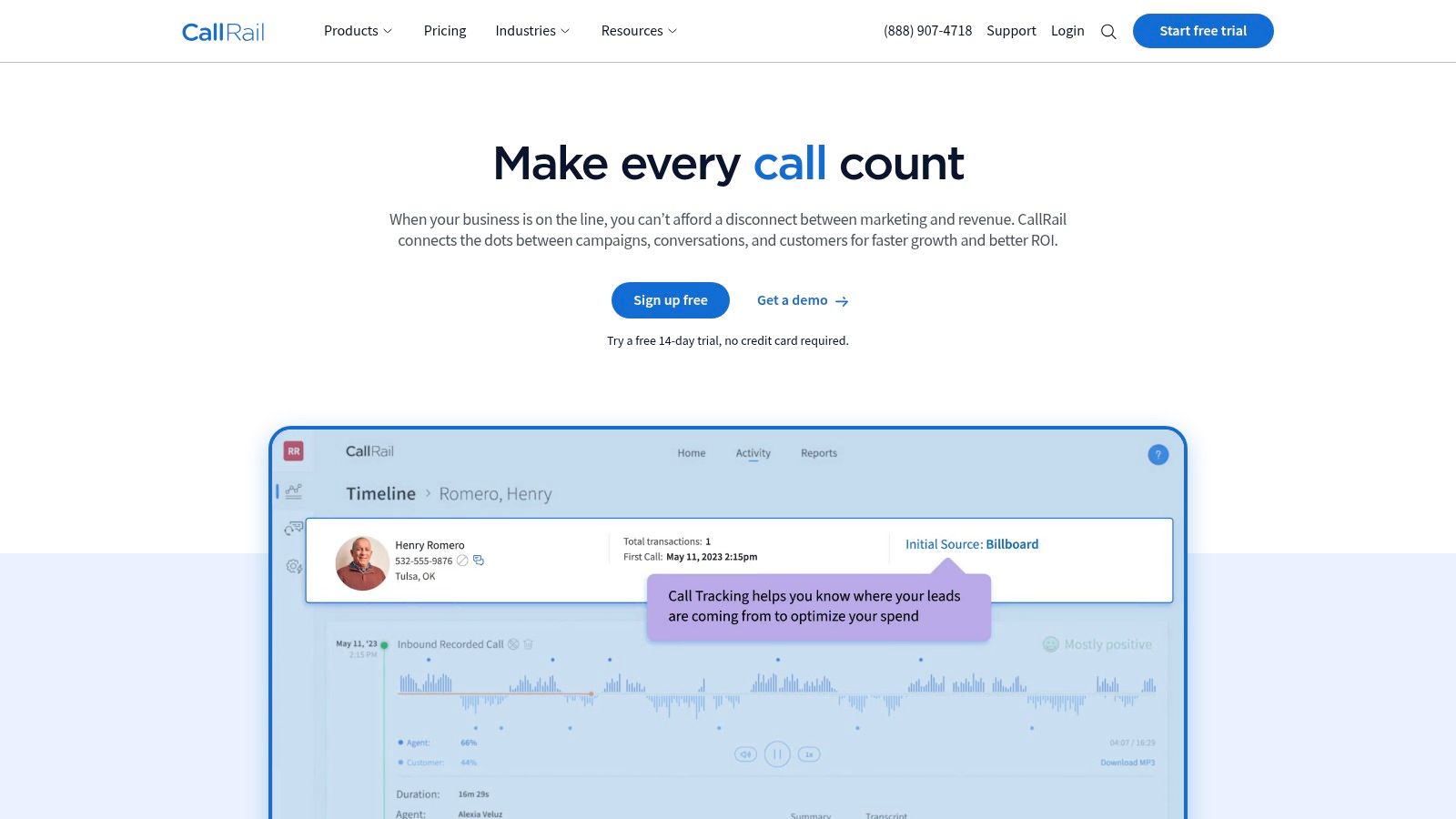
The platform's AI shines by automatically transcribing and summarizing every call, identifying keywords like "car accident" or "consultation" to qualify leads. This gives firms invaluable data on which ads are generating not just calls, but high-quality, retainable cases.
Key Features & Use Cases
- Conversation Intelligence: Automatically transcribe and analyze calls to tag qualified leads and new clients. A personal injury firm can use this to instantly identify and flag calls mentioning specific high-value case types.
- AI Call Summaries: Get concise summaries of every conversation, perfect for intake managers to review quality control or for attorneys to quickly grasp a new lead's situation before a follow-up call.
- Multi-touch Attribution: Track the entire client journey across calls, forms, and texts to understand which channels work together. This helps a firm see how a Google search, a website visit, and a final phone call all contributed to a new case.
Pricing & Implementation
CallRail offers transparent pricing starting around $45/month, which includes a set number of local numbers and minutes. The key consideration is that AI features and additional usage come with extra costs. Firms should monitor their call volume, as per-minute and transcription fees can add up. Implementation involves placing a JavaScript snippet on your website and using unique tracking numbers in your marketing campaigns.
| Pros | Cons |
|---|---|
| Helps prove which marketing campaigns produce retained cases. | Per-minute usage fees and overage charges can increase costs. |
| AI call summaries are excellent for intake coaching. | Transcription and AI analysis minutes are limited by plan. |
| Offers a 14-day free trial and clear entry-level pricing. |
Website: https://www.callrail.com
6. Google Local Services Ads (LSA) for Lawyers
While not a content creation tool, Google’s Local Services Ads platform is one of the most impactful AI tools for legal marketing available. It leverages Google's AI to place vetted law firms at the very top of search results for high-intent local queries. This pay-per-lead system uses machine learning to connect active searchers with qualified, "Google Screened" attorneys, driving direct calls and messages instead of just website clicks.
The platform’s power comes from its AI-driven ad placement and lead qualification. Google's algorithm determines which screened lawyer is most relevant to a user's query, considering factors like proximity, review ratings, and responsiveness. This automated matchmaking process bypasses traditional bidding wars for keywords, focusing instead on connecting firms with genuine potential clients in real time.
Key Features & Use Cases
- Pay-Per-Lead Model: Firms are charged per qualified lead (a call or message from a potential client) rather than per click. This makes it ideal for a personal injury or family law practice seeking to control client acquisition costs with a predictable budget.
- "Google Screened" Badge: Completing Google's verification process earns a trust-building badge displayed prominently on the ad. This helps a solo practitioner or small firm instantly establish credibility against larger competitors.
- Top-of-SERP Placement: LSAs appear above traditional Google Ads and organic results, capturing maximum visibility. This is crucial for practice areas like immigration or criminal defense, where clients often need immediate assistance.
Pricing & Implementation
Pricing is based on a cost-per-lead model, which varies significantly by practice area and geographic market. Initial setup involves a background check and license verification. A critical implementation step is establishing a robust intake process to answer calls promptly and dispute non-qualified leads within the platform to receive credit. Firms should monitor lead quality closely, as policy and data-use changes can occur.
| Pros | Cons |
|---|---|
| High-intent exposure with controllable, predictable lead costs. | Intake quality control is essential; bad leads can occur. |
| "Google Screened" badge builds instant consumer trust. | Verification and periodic policy changes require attention. |
| Particularly effective for local, consumer-focused practices. | Lead pricing varies widely by market and practice area. |
Website: https://business.google.com/us/ad-solutions/local-service-ads/
7. HubSpot
HubSpot is a unified, AI-enhanced customer platform that brings enterprise-grade marketing automation and content tools to the legal sector. While not legal-specific, its mature ecosystem and powerful CRM make it one of the most versatile AI tools for legal marketing for firms ready to scale. It excels at connecting marketing efforts directly to business outcomes through sophisticated attribution and workflow automation.
The platform's AI assistants, including Breeze AI agents, are embedded across its Marketing and Content Hubs. This allows law firms to generate blog post outlines, draft email campaigns, and even build website landing pages with simple prompts, significantly accelerating content production.
Key Features & Use Cases
- AI Content Assistants: Quickly create first drafts of blog posts on legal topics, generate email sequences for client nurture campaigns, or build landing pages for specific practice areas like estate planning or business formation.
- Multi-Touch Revenue Attribution: Track a lead’s entire journey from their first website visit to becoming a client. This helps a personal injury firm understand which marketing channels, like a specific blog post or Google Ad, are most effective at generating high-value cases.
- Advanced Workflow Automation: Build complex, trigger-based communication sequences. For example, a firm could create a workflow that sends a different set of educational emails based on whether a website visitor downloaded a guide on "Chapter 7" versus "Chapter 13" bankruptcy.
Pricing & Implementation
HubSpot offers tiered pricing from a free CRM to expensive Enterprise plans, with Marketing Hub Professional being a common starting point for serious automation. Higher tiers often require mandatory onboarding fees. While HubSpot integrates with many legal CRMs, firms must configure the platform to ensure it meets legal ethics and data privacy standards, as it is not purpose-built for the industry.
| Pros | Cons |
|---|---|
| Mature platform with robust automation and reporting. | Professional/Enterprise tiers have high costs and onboarding fees. |
| Strong ecosystem and extensive training resources. | Not legal-specific; requires configuration for compliance. |
| Works well with legal CRMs via connectors and APIs. |
Website: https://www.hubspot.com
8. Semrush
Semrush is a market-leading visibility management platform that has heavily integrated AI into its SEO and content marketing toolkit. While not a legal-specific tool, it's one of the most essential AI tools for legal marketing for firms serious about ranking on Google for high-value keywords. It provides the data and AI assistance needed to outperform competing firms in search results for specific practice areas.
The platform's AI-powered ContentShake AI and SEO Writing Assistant are particularly useful, helping law firms draft blog posts, practice area pages, and FAQs that are optimized for search engines. These tools analyze top-ranking content for a target keyword, like "car accident lawyer near me," and provide real-time suggestions to improve readability, tone, and SEO.
Key Features & Use Cases
- AI Writing & Topic Research: Use ContentShake AI to generate first drafts for blog posts on topics like "what to do after a slip and fall," then refine it with the SEO Writing Assistant to ensure it meets optimization best practices.
- Local SEO Management: Manage Google Business Profile listings, track local map rankings, and monitor client reviews for multiple office locations from a single dashboard. This is critical for personal injury or family law firms serving specific geographic areas.
- Competitive Gap Analysis: Identify valuable keywords that competing law firms rank for but you don't. This allows you to strategically create content to capture their traffic, a key part of effective keyword research for lawyers. Learn more about unlocking the power of keyword research for lawyers.
Pricing & Implementation
Semrush offers tiered monthly subscriptions, starting with a Pro plan (around $129.95/mo), with Guru and Business plans offering more features at higher costs. Add-on modules for local SEO or social media increase the price. While the interface is user-friendly, the sheer volume of data can be overwhelming. Firms should start by focusing on one area, like the Keyword Magic Tool or Position Tracking, before exploring the entire suite.
| Pros | Cons |
|---|---|
| Comprehensive SEO workflows for local and national campaigns. | Full-featured plans and add-on modules can be very expensive. |
| Consolidates research, content creation, and reporting. | AI-generated content requires human legal review for accuracy. |
| Extensive educational resources for training in-house marketing. | The amount of data and tools can have a steep learning curve. |
Website: https://www.semrush.com
9. Smith.ai
Smith.ai offers a hybrid receptionist service that combines artificial intelligence with live agents to provide 24/7 lead capture and qualification. It stands out as one of the most practical AI tools for legal marketing by solving a critical problem for law firms: never missing a potential client call. The service acts as a frontline defense, filtering out spam while ensuring every genuine lead is engaged professionally.
The platform’s strength lies in its blend of automation and human oversight. An AI-powered system initially handles calls, but can seamlessly transfer to a live agent if needed. This ensures efficiency for routine inquiries and a human touch for complex or sensitive new client matters, directly improving conversion rates from marketing campaigns. You can explore how firms are leveraging this technology to see how AI intake for law firms works.
Key Features & Use Cases
- 24/7 AI & Live Agent Answering: Capture leads from after-hours calls or website chats that would otherwise be lost. This is invaluable for a criminal defense firm whose potential clients need immediate responses at any time.
- Lead Screening & Qualification: Use a predefined script to qualify leads based on case type, location, or other criteria, ensuring attorneys only spend time on viable prospects. A family law firm can use this to filter out inquiries outside its practice area.
- Appointment Scheduling & CRM Integration: Automatically book qualified leads into an attorney's calendar and push call summaries directly into a firm's CRM (like Clio or Filevine), eliminating manual data entry.
Pricing & Implementation
Smith.ai offers predictable monthly pricing based on call volume, starting with AI-only plans and scaling up to include live agent support. The AI plans come with a 30-day money-back guarantee. Implementation requires careful script development to align with your firm's intake process and ethical guidelines. Firms should dedicate time to refining these scripts to ensure call quality and compliance.
| Pros | Cons |
|---|---|
| Cost-effective alternative to staffing a full intake desk. | Per-call overages can occur if call volumes spike unexpectedly. |
| Predictable pricing with a 30-day money-back guarantee. | Script tuning is needed to align with firm and bar rules. |
| Strong integrations with legal CRMs like Clio & Filevine. |
Website: https://smith.ai
10. Birdeye
Birdeye is an all-in-one experience platform that excels at reputation and review management, a critical component of a modern law firm's marketing strategy. While not exclusively a legal tool, its ability to automate review requests and leverage AI for response drafting makes it one of the most effective AI tools for legal marketing. It helps firms systematically build social proof and improve their local search rankings through consistent positive reviews.
The platform’s AI-powered review response generator, Robin, helps firms quickly address client feedback. It can draft professional, on-brand responses to reviews, saving time while ensuring every client feels heard, which is crucial for maintaining a positive online reputation.
Key Features & Use Cases
- Automated Review Solicitation: Integrate with your case management system to automatically send a review request via SMS or email when a case is closed. This is ideal for a high-volume practice like personal injury to consistently generate new reviews.
- AI-Assisted Response Drafting: Use Robin AI to instantly draft appropriate responses to both positive and negative reviews, ensuring timely and professional communication across platforms like Google, Avvo, and Facebook.
- Listings Management: Ensure your firm's name, address, and phone number (NAP) are accurate and consistent across dozens of online directories, a key factor for local SEO success.
- Unified Communications Inbox: Manage messages from web chat, text messages, and social media in a single dashboard to improve client responsiveness.
Pricing & Implementation
Birdeye operates on a custom pricing model based on the number of locations and features required, so a demo is necessary to get a quote. For best results, firms must align their internal case management workflows with Birdeye’s automation triggers. For example, setting the trigger to "case closed" ensures review requests are sent at the moment of highest client satisfaction.
| Pros | Cons |
|---|---|
| Direct integration between case milestones and automated review requests. | Best results require process alignment with case management stages. |
| Helps improve local search rankings through review velocity. | Pricing is custom and can be substantial for multi-office firms. |
| Scales effectively across multi-location law practices. |
Website: https://birdeye.com
11. Filevine (Lead Docket / LeadsAI)
Filevine is a comprehensive legal operations platform that bridges the gap between marketing, intake, and case management. While known for its case management capabilities, its integrated Lead Docket and LeadsAI features make it one of the most effective AI tools for legal marketing by ensuring a seamless handoff from lead to signed client. It's designed for firms that want to connect marketing ROI directly to case outcomes within a single ecosystem.
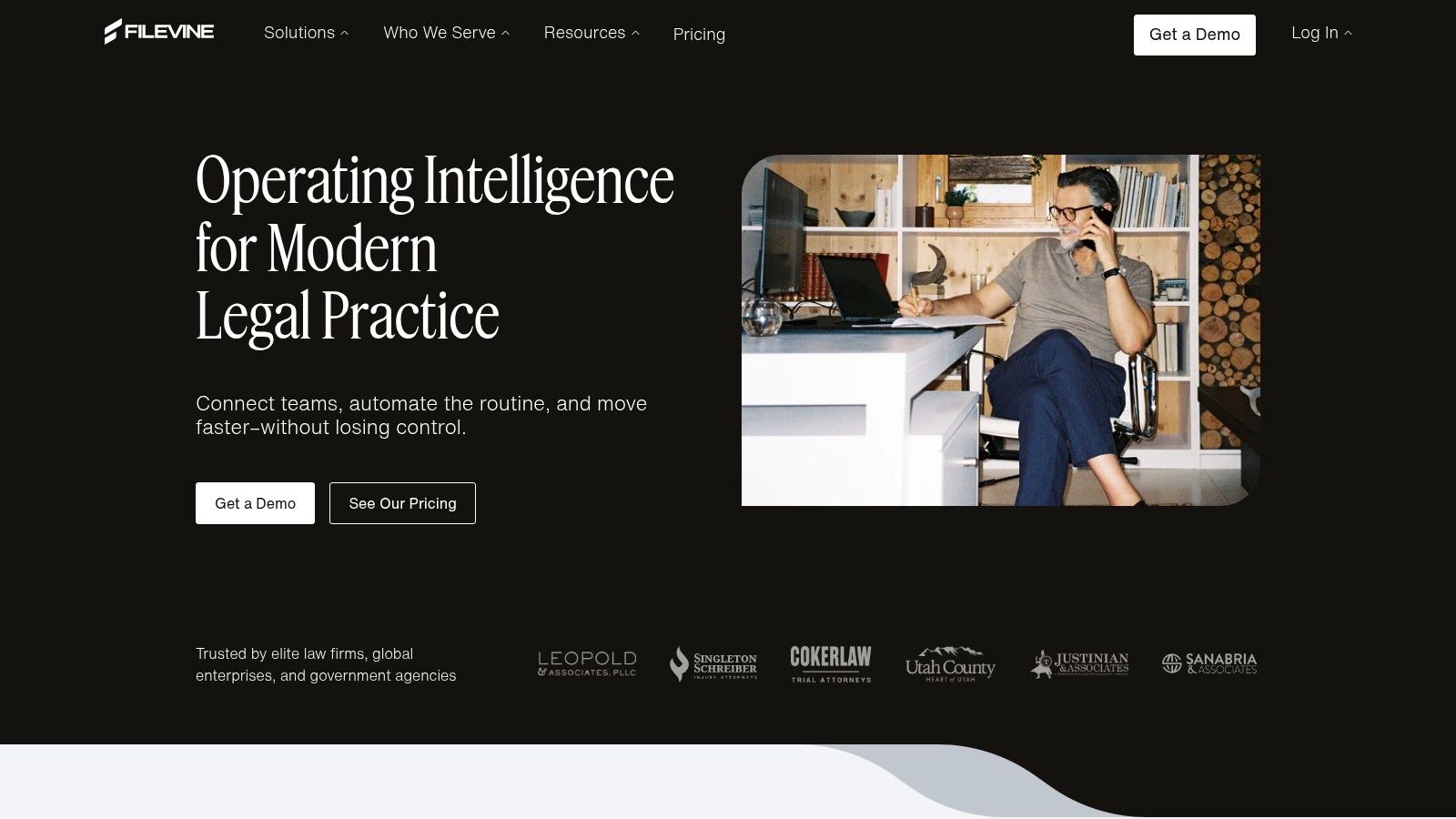
The platform's standout AI capability, LeadsAI, automatically summarizes inbound leads from web forms, chats, and emails. This allows intake teams to instantly understand the context and urgency of a potential case, enabling faster and more accurate triage without manually sifting through long messages.
Key Features & Use Cases
- LeadsAI Summarization: Automatically condenses new lead inquiries into concise summaries. An intake specialist at a high-volume personal injury firm can use this to quickly prioritize calls based on the severity and type of injury described.
- AIFields & Data Mapping: Extracts key data points like accident dates or injury types from unstructured text and maps them to custom fields. This helps automate conflict checks and case file creation, reducing data entry errors.
- DemandsAI: Utilizes case data to generate comprehensive demand letter drafts. This accelerates a critical stage in the litigation process, allowing attorneys to move cases toward settlement more efficiently.
Pricing & Implementation
Filevine operates on a custom pricing model, requiring a consultation and demo to get a quote. Firms should note that advanced AI features like LeadsAI and DemandsAI are often usage-based add-ons, which can impact the total cost. The platform is best suited for firms ready to commit to the Filevine ecosystem for both marketing intake and case management to realize its full potential.
| Pros | Cons |
|---|---|
| Bridges marketing, intake, and case management workflows. | AI features are often usage-based add-ons that can incur extra fees. |
| AI automation reduces manual review and speeds up triage. | Best suited for firms willing to standardize on the Filevine platform. |
| Robust security posture ideal for sensitive client data. |
Website: https://www.filevine.com
12. Clio (Manage + Grow with Manage AI)
Clio is a leading legal practice management system that has integrated artificial intelligence directly into its core products, Clio Manage and Clio Grow. While known primarily for case management, its AI features now position it among the top AI tools for legal marketing by connecting administrative tasks with client communication and intake, creating a unified workflow from initial contact to case closure.
Clio’s Manage AI stands out by automating routine communication and administrative burdens. It can draft client-facing emails and text messages, summarize long documents, and even suggest billable time entries from your work. This allows legal marketers and attorneys to focus on strategy and relationship-building instead of getting bogged down in repetitive, non-billable tasks.
Key Features & Use Cases
- Manage AI Content Drafting: Generate context-aware draft emails and text messages for client updates, appointment reminders, or follow-ups directly within Clio Manage. A family law firm can use this to quickly send a check-in message, saving time while maintaining client contact.
- Clio Grow Email Campaigns: Utilize Clio Grow to create targeted email campaigns for lead nurturing. The system allows you to segment contacts and send automated sequences to new leads, ensuring consistent communication from the first interaction.
- Marketing Integrations: Connect Clio to a wide ecosystem of marketing tools like Mailchimp or legal directories. This allows for seamless data flow between your practice management software and your dedicated marketing platforms, preventing data silos.
Pricing & Implementation
Clio offers several tiered subscription plans, and access to Manage AI capabilities may require specific higher-tier plans or separate activation. The marketing features are primarily housed within Clio Grow, which can be bundled with Clio Manage. Since Clio is a comprehensive system, firms should plan for a structured implementation process to integrate it fully with their existing marketing stack and workflows.
| Pros | Cons |
|---|---|
| Widespread adoption with mature support and strong security. | Marketing features are less robust than dedicated automation suites. |
| Integrates well with a large ecosystem of third-party tools. | Advanced AI capabilities may require more expensive subscription plans. |
| Clear AI roadmap with frequent product enhancements. |
Website: https://www.clio.com
Top 12 AI Tools for Legal Marketing — Comparison
| Product | Core features ✨ | UX & Quality ★ | Value & Pricing 💰 | Target audience 👥 | Standout / USP 🏆 |
|---|---|---|---|---|---|
| Lawmatics | Legal CRM + intake, visual automations, LM[AI] one‑click emails ✨ | ★★★★ — legal workflows | 💰 Custom pricing; add‑ons raise TCO | 👥 Small–mid U.S. law firms | 🏆 All‑in‑one legal CRM + intake |
| Scorpion | Full‑service agency + Budgets AI, landing‑page & ad optimization ✨ | ★★★★ — managed execution | 💰 Premium agency fees | 👥 Growth‑focused firms in competitive practice areas | 🏆 End‑to‑end managed marketing with AI |
| FindLaw (Thomson Reuters) | Attorney websites, PPC managed, INSIGHT analytics, directory placements ✨ | ★★★★ — proven but vendor‑centric | 💰 Bundled packages; long‑term contracts | 👥 Firms seeking national directory visibility | 🏆 Large network & quick paid visibility |
| Martindale‑Avvo | Paid profiles, pay‑per‑lead, Ngage live chat, multi‑brand packages ✨ | ★★★ — broad reach; lead quality varies | 💰 Custom quotes; PPL options | 👥 Firms wanting multiple consumer lead sources | 🏆 Multiple well‑known legal brands in one platform |
| CallRail | Call & form tracking, Conversation Intelligence, AI call summaries ✨ | ★★★★ — strong attribution & transcripts | 💰 Transparent entry plans; usage/overages | 👥 Firms proving ROI from calls/forms | 🏆 Call attribution + AI summaries for intake coaching |
| Google Local Services Ads (LSA) | Pay‑per‑lead local ads, Google Screened badging, geo targeting ✨ | ★★★★ — high‑intent exposure | 💰 Pay‑per‑lead; pricing varies by market | 👥 Local consumer‑facing practices (e.g., injury, criminal) | 🏆 Prime SERP placement with screened badge |
| HubSpot | CRM + Marketing Hub, advanced workflows, AI assistants & agents ✨ | ★★★★ — enterprise UX & ecosystem | 💰 Tiered (Starter→Enterprise); higher TCO | 👥 Firms needing scalable marketing ops | 🏆 Mature platform + extensive training/resources |
| Semrush | SEO, AI writing, local rankings, competitor & SERP tracking ✨ | ★★★★ — comprehensive SEO workflows | 💰 Subscription tiers; modules add cost | 👥 In‑house SEO/marketing teams at firms | 🏆 All‑in‑one SEO & content intelligence |
| Smith.ai | Hybrid AI receptionist + live agents, 24/7 intake, CRM sync ✨ | ★★★★ — reliable hybrid intake | 💰 Predictable plans; per‑call overages possible | 👥 Firms wanting 24/7 intake without full staff | 🏆 AI + human backup for consistent intake |
| Birdeye | Reviews automation, listings, messaging, AI response drafting ✨ | ★★★★ — boosts local presence with automation | 💰 Custom pricing; scales by locations | 👥 Multi‑location or local SEO‑focused firms | 🏆 Automated review solicitation tied to case stages |
| Filevine (Lead Docket / LeadsAI) | Case management + LeadsAI, AIFields, chat‑with‑case assistant ✨ | ★★★★ — strong operations & security | 💰 Platform pricing; AI features may be usage‑based | 👥 Firms centralizing intake → case workflows | 🏆 Marketing→intake→case automation & data extraction |
| Clio (Manage + Grow) | Clio Manage & Grow, Manage AI for admin, campaign/email features ✨ | ★★★★ — widely adopted legal OS | 💰 Tiered plans; some AI features require upgrades | 👥 Broad U.S. firms seeking operations consolidation | 🏆 Ubiquitous legal OS with growing AI roadmap |
Your Next Step: Building an AI-Powered, Future-Proof Firm
The journey through the landscape of AI tools for legal marketing reveals a powerful truth: the future of client acquisition and firm growth is inextricably linked with technology. We've moved beyond theoretical benefits to a reality where platforms like Lawmatics and Clio streamline intake with intelligent automation, while services like Scorpion and FindLaw leverage AI to optimize ad spend and content reach. The era of manual, time-consuming marketing tasks is fading, replaced by a new paradigm of data-driven efficiency.
This shift is not about replacing the human element of law but enhancing it. By automating client communication follow-ups, lead qualification with tools like Smith.ai, and reputation management through platforms such as Birdeye, you and your team are freed from administrative burdens. This reclaimed time can be reinvested directly into high-value activities: crafting brilliant legal strategies, fostering stronger client relationships, and providing the exceptional counsel that defines a successful practice. The core takeaway is that implementing these tools is a strategic investment in your firm's most valuable asset-its people.
From Information to Implementation: Your Action Plan
Feeling overwhelmed by the options is natural. The key is to avoid analysis paralysis and adopt a methodical, strategic approach to integration. Instead of attempting a complete technological overhaul overnight, focus on incremental, high-impact changes.
Use this simple framework to guide your decision-making process:
- Identify Your Biggest Bottleneck: Where is your firm losing the most time or potential revenue? Is it inconsistent lead follow-up? A lack of insight into marketing ROI? A struggle to generate positive online reviews? Pinpoint your single greatest challenge first.
- Match the Tool to the Problem: Revisit the tools discussed in this guide with your specific problem in mind.
- Struggling with Intake & CRM? Look closely at Lawmatics, Clio Grow, or Filevine's Lead Docket.
- Need to Boost Local Visibility? Focus on optimizing Google LSA and using Birdeye to dominate local reviews.
- Lacking Marketing Performance Data? Implement CallRail for call tracking and Semrush for comprehensive SEO and competitor analysis.
- Start with a Pilot Program: Select one tool to implement. Designate a champion within your firm to lead the adoption process. Set clear, measurable goals for the first 90 days. For example, your goal might be to "reduce lead response time by 50% using Smith.ai's virtual receptionists" or "increase positive Google reviews by 20% with Birdeye's automated campaigns."
- Measure, Iterate, and Expand: After the initial trial period, rigorously assess the results against your goals. Was the tool effective? Did it integrate well with your existing processes? Based on this data, you can decide whether to fully adopt the tool, adjust your strategy, or explore a different solution before expanding your AI toolkit.
Final Considerations for a Seamless Transition
As you integrate these powerful AI tools for legal marketing, remember the foundational principles that ensure success. Prioritize data privacy and ethical compliance above all else. Ensure any platform you adopt adheres to client confidentiality standards and legal marketing ethics rules in your jurisdiction.
Furthermore, invest in proper training for your team. The most sophisticated AI platform is useless if your staff doesn't understand how to leverage its features effectively. A successful implementation is as much about changing habits and mindsets as it is about installing new software. By starting small, focusing on solving specific problems, and prioritizing your team's adoption of the technology, you can build a resilient, efficient, and future-proof firm poised for sustained growth in an increasingly competitive legal marketplace.
Navigating the complex integration of SEO, paid media, and AI can be challenging, but you don't have to do it alone. RankWebs specializes in creating cohesive, data-driven marketing strategies for law firms that leverage the best of these technologies to deliver measurable results. Visit RankWebs to see how our expertise can build the powerful marketing engine your firm deserves.